Monday, 30 September 2013

Gerry Hassan and Missing Voices


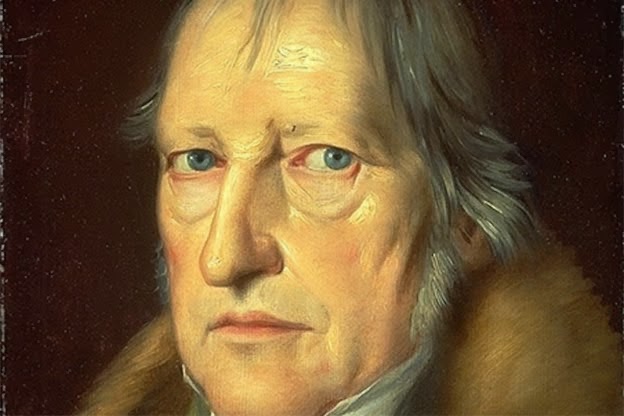
                             Georg Wilhelm Friedrich: click magnet extraordinaire


For reasons unfathomable, my most popular post to date was one on Gerry Hassan and Hegel. Partly in the hope of attracting all those groovy Hegelians out there, partly because the two 'Hs' do just seem to go together so well, I'm returning to the theme...

Hassan's latest essay on the missing voices of public life returns to his well worn case that Scotland is soothed by a comforting narrative which excludes some of the grim realities of life and, relatedly, some types of voice:

One of the positive accounts of modern Scotland which has risen in recent years has been the richness of artistic and cultural Scotland. This was witnessed in the recent Creative Scotland stramash which saw its Chief Executive Andrew Dixon shown the door. An organised group of artists and cultural figures saw themselves as defending the interests of a community and a set of inclusive, enlightened values.
[...]
This cultural narrative of modern Scotland has fed into the political narrative and vice-versa, with both cross-fertilising each other. Thus, the cultural ‘official story’ has been bought into by the political and non-cultural world which has little detailed cultural intelligence or knowledge (with honourable individual exceptions). And at the same time, the dominant political account of Scotland – of difference, autonomy and being a centre-left inclusive nation that doesn’t vote Tory – has been absorbed by the cultural world.

Now what’s the problem with all this you might say? The trouble is that these are selective, panglossian accounts of Scotland. They have elements of truth, but also of omission and significant wish fulfillment.

This cross-fertilisation of cultural and political stories is something little understood. Both reinforce and validate each other, the cultural world buying into the political version second hand with little detail, and the political community reinforcing the cultural story based on scant knowledge. And the cumulative effect of this is to strengthen Scotland’s comforting story of itself: as the land of good people and values who reject Tories and market vandalism.

Now, as so often, Hassan has good points here. There are some nauseatingly simplistic narratives floating around which serve to obscure real problems in education and health. (And indeed art.) But we need to be careful to distinguish between two issues: the quality of any particular narrative; and the poverty inherent in the narrative process itself.

Let the great man (Hegel, that is) speak:

Public opinion therefore deserves to be as much respected as despised — despised for its concrete expression and for the concrete consciousness it expresses, respected for its essential basis, a basis which only glimmers more or less dimly in that concrete expression. But in itself it has no criterion of discrimination, nor has it the ability to extract the substantive element it contains and raise it to precise knowledge. Thus to be independent of public opinion is the first formal condition of achieving anything great or rational whether in life or in science. Great achievement is assured, however, of subsequent recognition and grateful acceptance by public opinion, which in due course will make it one of its own prejudices.

Addition: Public opinion contains all kinds of falsity and truth, but it takes a great man to find the truth in it. The great man of the age is the one who can put into words the will of his age, tell his age what its will is, and accomplish it. What he does is the heart and the essence of his age, he actualises his age. The man who lacks sense enough to despise public opinion expressed in gossip will never do anything great. [Philosophy of Right, Part III, The State, s.318)]

Hegel's point is that public opinion needs to be worked on, to be transformed through institutions such as political leadership and the press into something rational and substantive rather than mere chatter. Now it is perfectly possible to argue that Scotland's current institutions (journalism, artists, politicians) make a bad job of doing this -and that's indeed plausible enough (although it's hard to avoid the thought that most Western democracies might make similar claims). But Hegel's point is that the process of translation and selection is essential and requires the exercise of power, in particular political power. From that point of view, Hassan himself is part of that essential translation of public opinion: as he spins his myth of marginalized selves and Scots troubled by the sense of a 'missing self', new absences are created, new elisions made.

Hassan goes on:

There is a modern version of it in the independence debate with the redoubtable Pat Kane recently commenting, ‘This nation is in conversation’.

Much as I would like it to be otherwise, the whole nation is not engaged in conversation. Challenging such assumptions isn’t about some abstract notion of an idealised, participative democracy, but the limits of Scotland’s public sphere and the truncated democracy we live in. If people want to change that, as I know Pat does, we have to start by reflecting this and then discussing how we change it, not continuing the comforting stories.

Well, unless everyone has become a Trappist, then I suspect the whole nation is engaged in  conversation. The problem is that it isn't focused on the sort of things that Hassan wants it to be focused on, essentially politics and, in particular, the politics of the independence debate. (Even there, I suspect there can't be many households where the subject hasn't cropped up. But I suppose Hassan would then ask: has it been discussed properly? Which is, of course, to say, in the manner in which a certain class of political commentator might approve.)

To transform the texture of everyday life and conversations into a Conversation fit to be approved of is an exercise of power. It would probably take a herd of Foucaults to do justice to the detail of the ways that this happens, but Hassan's piece is itself part of that exercise in construction, highlighting some of the conversations, taxonimizing all, dismissing some. But by presenting this as the merest commonsense, rather than a particular take from a particular standpoint, it merely reinforces what is one of the most pernicious of all Scottish myths, which is that there is an identity between true judgment and the poses of 'progressive politics'.

The profoundest absences are created in precisely those areas which 'progressive' politics finds most difficult. Let's pick three. First, there is the individual, that interior spiritual life referred to by Plotinus in the flight of the alone to the alone. Political narrations such as Hassan's find it difficult to cope with the essentially interior which borders on the inarticulable: the very process of constructing the narrative excludes a space which needs, in order to survive, to be both ignored yet also protected by politics. (Witness 'Secular Scotland' (Popular Front (Continuing)) and its persistent campaigns against spiritual education.) Secondly, there is the erotic rather than the sexual: what goods one loves and how one lives out those meanings, rather than the publicly available, crass physical gymnastics of sex. (Witness the equation of profoundly different types of love in same sex 'marriage'.) Thirdly, there is religion. How people come together to live in a communal yet private space that does justice to both the erotic and the spiritual, the natural end and the supernatural end of human beings. ('We don't do religion...' Well fine, but expect it to end in tears, because human beings without religion are tattered coats on sticks.)

Perhaps another way of putting this is that all storytellers are liars and, as in Plato's Republic, probably deserve to be expelled from the city. The two spaces within which most of humanity lives out its profoundest experiences are the family and religion, spaces in neither of which we spend much time telling tales*, and rather more simply being (even 'knocking around'). I'm not sure that the life of such spaces can be captured at all in public narratives. But at the very least that capture is extremely difficult, and all I see in narratives such as Hassan's is a relentless focus on what can easily be translated into political campaigns rather than a grappling with the fullness of humanity.

[*Rereading this, I'm conscious how the claim that we don't spend much time in religious spaces telling tales runs against (eg) the obvious fact that a  lot of (bible) stories are told in churches and (in deeper theological mode) the emphasis of a lot of modern theology such as Hauerwas' on narrative. I'd resist this: I think there's a good case to be made that many religious practices undermine the neatness of narrative in a similar manner to the way small children undermine coherent storytelling by vomiting at inconvenient moments or demanding the toilet. But for another time...]

Wednesday, 25 September 2013

Platonism and Catholicism


Ed Feser's blog pointed me in the direction of Pure by Mark Anderson. As you'll see from Feser's blogpost, it's a work that puts forward a Platonic vision of the world as an alternative to modernity.

It's not a long read at 108 pages, but well worth spending time with. Perhaps the most striking thing for me is its restatement of that Platonic insight that to see truth properly requires a certain sort of character: you can't just argue your way to truth, but you also require to be a certain sort of person (and that sort of person is only achieved through effort, both individual and social).

A sample passage:

One may begin by regarding Platonism as an abyss, by leaping into the system motivated by a Nietzschean desire for intellectual exploration. But the man who does so will find that he does not fall, that he is supported, that beneath his feet there is no void, but rather solid and stable ground. And one day he will learn that his desire to plunge into murky abysses was naive and misguided to begin with -was, in brief, an expression of the decadence of modernity, for which the best remedy is the Platonism that now sustains him.

Some of the oddest things I've come across recently are people saying that 'Catholicism just makes random stuff up'. (It's usually in the context of sexual teachings.) It surprises me because, of all the charges you could make against Catholicism, this is one of the most implausible. One of the first things that ever made me think that Catholicism might be worth exploring (and it took many more years until I actually did) was the claim (by an atheist philosophy tutor) that he admired the systematic nature of Catholic moral teaching as one of the great intellectual monuments of human culture. He thought it was wrong -perhaps even dangerously wrong- but its system and rigour impressed him.

It is certainly this intellectual purity of Catholicism that attracted me: its system and its clarity. In different ways, for example, both the Catechism of the Church and the Summa Theologiae  are beautiful: systematic and comprehensive. That doesn't make them right or true (although of course a Platonic thought is that goodness, truth and beauty are linked) but it does make them attractive. (And thus one more reason for thinking Pope Francis has a point in making the 'big vision' the centre of missionary endeavour.)

I'd originally thought about using an image of a crystal or the like to represent purity at the top of this post, but it's very hard to look at such a thing in this context and not to be overwhelmed by nauseating waves of sentimentality or kitsch. Zurbaran, on the other hand, manages to portray the stuff of ordinary life with a pure spiritual intensity. If you're attracted to Platonism, Catholicism provides all the rigour and intellectual clarity you could want, but with something that Plato often misses: a love for the individual and the human. Catholicism is pure but human. It is also, in a way that neo-Platonism isn't, a living option: try taking up neo-Platonic theurgy and you'll likely as not end up as some sort of 'Hermetic Order of the Golden Dawn' crank, squabbling over who has the correct authorization from the Secret Chiefs or such like. Take up Catholicism and you'll find yourself in the midst of not only a system with peerless intellectual, aesthetic and moral purity, but also one that has branch offices on practically every corner.


Monday, 23 September 2013

The Pope's interview


Everyman and his dog (well, cat, since dogs apparently haven't yet worked out how to use the new i-phone) in the Catholic blogosphere have been worrying away at Pope Francis' 12,000 word interview.

Somewhere between the secular 'Pope abolishes morality and welcomes gay sex' (Yah!) and the ultra-Catholic 'Pope abolishes morality and welcomes gay sex' (Boo!) interpretations, there is lot that's worth pondering on. So let's do that very Jesuit thing of trying to apply what he says to our here and now in Scotland and the rest of Western Europe.

I think the heart of the interview is this:

Proclamation in a missionary style focuses on the essentials, on the necessary things: this is also what fascinates and attracts more, what makes the heart burn, as it did for the disciples at Emmaus. We have to find a new balance; otherwise even the moral edifice of the church is likely to fall like a house of cards, losing the freshness and fragrance of the Gospel. The proposal of the Gospel must be more simple, profound, radiant. It is from this proposition that the moral consequences then flow.

The Catholic Church stands in Scotland (secular, Protestant) and the rest of Western Europe as a missionary: we cannot rely on preaching to those who already have a good understanding of and good attitude towards Catholicism. Much better to think of those early Jesuit missionaries walking into a completely different and even hostile culture. Given that framework, what should the missionary do? There is little point in issuing isolated moral injunctions: they won't make sense to people and they will simply trigger hostility. The central point to be got over is a vision. And here the vision is of salvation and healing:

I see the church as a field hospital after battle. It is useless to ask a seriously injured person if he has high cholesterol and about the level of his blood sugars! You have to heal his wounds. Then we can talk about everything else. Heal the wounds, heal the wounds.... And you have to start from the ground up.

And in getting over that vision, there is an attitude:

The senses that find God are the ones St. Ignatius called spiritual senses. Ignatius asks us to open our spiritual sensitivity to encounter God beyond a purely empirical approach. A contemplative attitude is necessary: it is the feeling that you are moving along the good path of understanding and affection toward things and situations. Profound peace, spiritual consolation, love of God and love of all things in God—this is the sign that you are on this right path.

So, first the big picture, then the detail of what follows from that:

A beautiful homily, a genuine sermon must begin with the first proclamation, with the proclamation of salvation. There is nothing more solid, deep and sure than this proclamation. Then you have to do catechesis. Then you can draw even a moral consequence. But the proclamation of the saving love of God comes before moral and religious imperatives. 

OK. What follows from all this? Let's take two (very) specific cases.

First, there is the question of same sex 'marriage' in Scotland. Where we are now -not where we'd want to be, but where we in fact are- is that it is in the process of being introduced. As I've said before, that means, now, that we're in a new phase: not one which is about the immediate influencing of policy, but one where the Church's interventions are about the vision of marriage and sexuality: the big picture. There is absolutely no chance of that vision having an immediate effect, but we need to focus on putting it forward, both as part of our contribution to the closing phases of the political debate, and as part of ensuring that the Church (and the family) continue to exist as part of the field hospital: without that continuing vision of what human sexuality is truly like, as part of that more general insight that we are all sinners and all broken vessels in need of God, then they cannot continue to function as healing in the world.

Second, and this is rather a personal focus, what of the Pope's comments on manualist Thomism?

Humans are in search of themselves, and, of course, in this search they can also make mistakes. The church has experienced times of brilliance, like that of Thomas Aquinas. But the church has lived also times of decline in its ability to think. For example, we must not confuse the genius of Thomas Aquinas with the age of decadent Thomist commentaries. Unfortunately, I studied philosophy from textbooks that came from decadent or largely bankrupt Thomism. In thinking of the human being, therefore, the church should strive for genius and not for decadence.

Now, I didn't particularly want to read this. My present view is that the tradition of Thomistic commentary and, in particular, the manuals produced by the nineteenth century neo-Thomist revival are underrated: they have a clarity and system that we clearly need in the intellectual life of the modern Church. On the other hand, a Church that was formed entirely in this tradition would be jejune: without (to put it very roughly) the sort of 'literary' sensibility that you find in eg Balthasar  (another refugee from the manuals), or perhaps more exactly that sort of open ended exploration and incompleteness you find in Plato's earlier dialogues, Catholic theology and philosophy would be impoverished.

So where does that leave me? Academically, it's always a good thought that if whole periods of intellectual endeavour are written off as decadent, they are probably worth investigating: the 'Whig' view of philosophy that holds it blossomed in Greece and then went into a 1500 year deep freeze until Descartes won't wash, and I don't see that we should adopt a similar 'Little Ice Age' view that nothing worthwhile happened between Aquinas and the present day in Thomism. On the other hand, 'ressourcement' can be an excellent idea and some minds (and periods) are indeed greater than others. That leaves me here:

Our life is not given to us like an opera libretto, in which all is written down; but it means going, walking, doing, searching, seeing.... We must enter into the adventure of the quest for meeting God; we must let God search and encounter us.

That general piece of advice holds as good for the intellectual life as it does for anything else in the human quest.