Friday, 9 March 2012

What is natural law?


                                   Is 'natural law' just a list of barmy Catholic prejudices?

In a few combox exchanges, the question of what Catholics mean by ‘natural law’ has come up. In particular, there seems to be a sense among some non-Catholics that the term simply amounts to ‘the Catholic rule book’ (probably lodged in the care of albino warrior monks from Opus Dei) and thus can be dismissed as the usual Catholic mixture of bigotry and outdated mumbo-jumbo.

In essence, the natural law is just the Catholic commitment to reasoning applied to the derivation of Catholic ethics from reasoning about human nature. Unlike many Protestants, who have a commitment to scripture alone as the basis for their religious beliefs, Catholics recognize reason as a source of knowledge about God and human beings.

Faith and reason are like two wings on which the human spirit rises to the contemplation of truth; and God has placed in the human heart a desire to know the truth—in a word, to know himself—so that, by knowing and loving God, men and women may also come to the fullness of truth about themselves.
Preamble to Fides et ratio

Philosophy is thus recognized as a key element in Catholic understanding of the world. Moreover, that philosophy is not just a commitment to a particular philosophical system, but to philosophical enquiry as such:

In effect, every philosophical system, while it should always be respected in its wholeness, without any instrumentalization, must still recognize the primacy of philosophical enquiry, from which it stems and which it ought loyally to serve. para 4 Fides et ratio

When the term ‘natural law’ is used, a distinction needs to be made between (at least) two senses. First, there is just that commitment to philosophical enquiry about human nature as a basis for ethics. (Let’s call that 'natural law as aspiration'.) Second, there are the results of 2000 years of that enquiry within the Church, guided by the Holy Spirit and articulated by the divine authority given the Pope and the bishops as the successors of Peter and the Apostles. (Let’s call that 'achieved natural law'.)  Now non-Catholics are going to be seriously underimpressed by direct reference to the second sense. While it would be ridiculous for a faithful Catholic not to focus on the achieved results of the enquiry, equally, it would be ridiculous for us to expect non-Catholics to accept those results without explanation.

So in engaging with non-Catholics on ethical issues, we need to go back to basics, to the first sense: to a shared commitment to reasoning about human nature as a basis for ethics. Now even that is rather more than many non-Catholics will accept, and, even if in principle they accept it, is rather more than many can manage in practice. Those who will not accept it in principle are those who are in thrall to a post-modern denial of human nature (‘it’s all constructed by society’) or to the existence of philosophical rationality itself (‘whatever society decides is right’). Those who in practice deny it are those who keep repeating that there are no arguments in favour of a particular position when there clearly are (example Joan MacAlpine), or those who expect all philosophy to be conducted in soundbites on Newsnight Scotland (example Patrick Harvie). There are of course things that can be said to both of these groups, but they are particularly difficult to reach rationally.

But let’s say we have a dialogue with someone who is willing to take ‘a shared commitment to reasoning about human nature as a basis for ethics’ as the starting point. In essence, we are thus committed to reperforming more than 2000 years of thought to get to the final results of achieved natural law: the results of the Church’s exploration of natural law as aspiration. Well, nothing better to do! And if that’s what’s needed, let’s get our sleeves rolled up…

However, much easier for all involved if we could agree on a slightly fuller content to the notion of natural law as aspiration. If we could agree on at least the first steps to be made in such an enquiry, then we might have a rather more fruitful discussion than if we have to start the enquiry completely from scratch. My own position (and that of Catholic philosophers such as John Haldane) on this is that it is the Graeco-Roman philosophical heritage that ought to be this common ground. I’ll say more about why in principle this is in a subsequent post. But for the moment it may be enough to make two broad points. First, why not? Many of the current debates in philosophy have been fuelled by insights gleaned from that heritage. No university philosophy course in the UK (well, that’s probably a bit rash, but I doubt if there are many!) lets students through without exposure to ancient philosophy. Exploration of ancient philosophy can only be helpful to providing depth and content to ethical debates that rapidly become stale, political campaigns rather than explorations of fundamental issues of human identity and flourishing. Exploring the contribution of ancient philosophy on issues such as same sex ‘marriage’ and euthanasia ought to be entertained, even if that falls short of a prior commitment to accepting the results of those explorations. Second, western ethics just is the child of Greece and Rome (and Jerusalem). Of course, it would be much better from a Catholic point of view if we could accept a few more steps and say bring Aquinas into the exploration. But if we can’t get the full achieved natural law, at least let’s go back to those elements of Plato, Aristotle, Stoicism and Neo-Platonism which came into Christianity (and thus those secular ethics that evolved from Christianity) and see what we can make of them.

The safest general characterization of the European philosophical tradition is that it consists of a series of footnotes to Plato.

A. N. Whitehead, Process and Reality, 1929

Monday, 5 March 2012

Denunciation of same sex 'marriage'

Well, yes, of course there's our Cardinal's very clear denunciation of same sex 'marriage' in the Telegraph about which I have very little to say other than 'Good on yer!'.

But another recent criticism of same sex 'marriage' of perhaps almost equal importance was Christopher Biggins' intervention on Loose Women


Biggins locutus est, causa est finita.

(H/T Peter Ould.)

Thursday, 1 March 2012

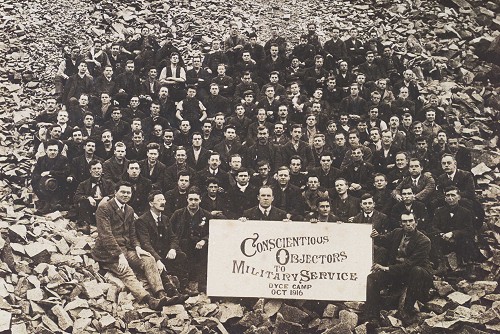
Conscientious objection


                            Anyone who disagrees with current thinking should be trodden on....?


As widely reported, two Scottish midwives have lost their case in the Court of Session to avoid participating in the supervision of abortions. I'm not going to pretend to be a lawyer, so will leave comment on the legal correctness of the decision to barrister, Neil Addison:

“The case is yet another example of the way in which the UK Courts are interpreting s9 of the European Convention on Human Rights (Freedom of Religion) in the most limited and restrictive way possible. The courts have not hesitated to use the convention to protect murderous terrorists but have refused to use it protect two midwives who do not want to kill unborn children.”

“What is more surprising is the extremely restrictive interpretation the judge has put on the Conscientious Objection clause in s4 of the Abortion Act. As the judge has interpreted s4 believing Catholics,Muslims and others will never be able to take any form of supervisory or management role as midwives or nurses unless they are prepared to be complicit in the provision of abortions.”

“This decision is in stark contrast to recent decisions in the United States’ courts which have applied the American First Amendment to protect the conscience rights of pharmacists who refused to dispense the morning-after pill.”
(From Protect the Pope.)

Putting aside the legal issues and this specific case, what are the underlying moral principles involved? The philosopher, Hugh MacLachlan, rather dodges the point in today's Scotsman by focusing on the rather narrow question:   'Do we have, in all circumstances, a moral right to have nothing to do with the provision of abortions? Not exactly.'  Having, from a secular point of view (correctly) answered that we do not, he then concludes, '  If all nurses refused to do anything they felt related to abortions, women who required them would be deprived of abortions. People do not have a moral right to remain as nurses and persist in such refusal.' 

Up to a point, Lord Copper. Clearly, no one is suggesting that the mere thought that one might be partaking in an immoral action should be sufficient to abolish the normal contractual and social duties we have: at the least, there has to be some test of reasonableness involved. Moreover, there is no reason (beyond MacLachlan's implicit Kantianism) to introduce the test of universalizability: what would happen if all nurses refused... We are talking about the actions of a minority of nurses and the place of conscientious objection for minorities is already recognized in the Abortion Act and elsewhere.

What is lacking, both in MacLachlan's analysis and in the sort of combox debates I've regularly found myself involved in on similar cases is any sense of why conscientious objection is a good thing. In the absence of such reflection, the argument appears very simple. On the one hand, you have the general duties of a job and the inconvenience caused to others by conscientious objection. On the other hand, you have the hurt feelings of a couple of deluded believers in Sky Fairies. Not much of a contest.

Now putting aside, from the Catholic perspective, that you are asking two women to partake in murder, why should society, even when it disagrees with a particular moral position, and despite all the arguments against it,  facilitate conscientious objection? The general answer is given in John Stuart Mill's On Liberty: that society has an interest in the encouragement of individuality and conscientious reflection among its members.

Mill's most famous conclusion from this work, the Liberty or Harm Principle, is, in this sort of case, a rather better test than the universalizability test hinted at in MacLachlan's article:

That the only purpose for which power can be rightfully exercised over any member of a civilized community, against his will, is to prevent harm to others. (On Liberty, ch1.)

Can someone's conscientious objection be accommodated without harming others? Sometimes the answer will be no -and then we have a different situation. But very often the answer will be yes, given a certain amount of good will and give and take.

However, more important than the Liberty Principle is the general view of the worth of individualism and the development of rational moral reflection within society. As Mill puts it:

The only freedom which deserves the name, is that of pursuing our own good in our own way, so long as we do not attempt to deprive others of theirs, or impede their efforts to obtain it. Each is the proper guardian of his own health, whether bodily, or mental or spiritual. Mankind are greater gainers by suffering each other to live as seems good to themselves, than by compelling each to live as seems good to the rest.  (On Liberty, ch1.)

Clearly, this doesn't end the possibility of conflict arising from minorities demanding inconvenient or even harmful exemptions. Clearly, this doesn't end the question, for Catholics, of when participation in a socially accepted evil becomes so remote that one, in conscience, is able to continue. But until the general principle that it is good to let people act according to their own lights is recognized, brought into reflection on these issues, and the burden of proof placed on those who oppose conscientious objection in specific cases to show the harm that it would cause, the suspicion remains that what we are seeing is the onward march of 'the tyranny of the majority' that Mill warned against.