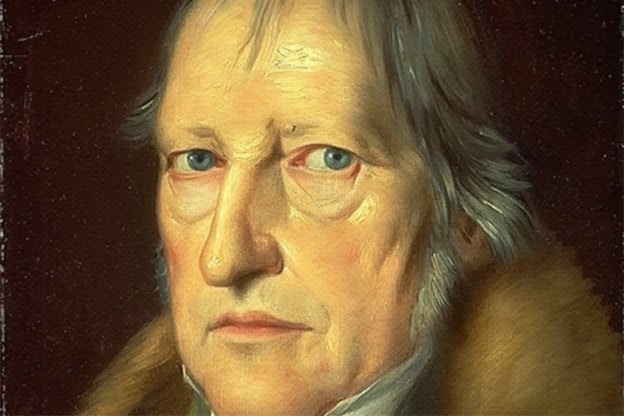
Showing posts with label Gerry Hassan. Show all posts

Thursday, 14 August 2014

On not understanding politics: Leo Strauss and Gerry Hassan


One of the great advantages of anonymous blogging is that there is little need to pretend to more knowledge than one has. A degree of anonymity reduces (even if it does not entirely abolish) the pride and defensiveness that leads us to claim understanding where we do not understand. 'Blogging' as an activity is essentially ephemeral and experimental: unlike teaching or 'proper' publishing, there is less need to pretend that the product is finalized.

So I'm quite happy to admit that I don't fully understand Leo Strauss. I've been dipping into him for a good few years now. At the beginning, familiar with Myles Burnyeat's hatchet job on him (the original is behind a paywall but the reaction is available here) and the orthodoxy in left wing circles that he was somehow the fons et origo of America's neo-cons -and perhaps more straightforwardly that (almost) no one in the UK reads him- I read him more in the way that I desperately tried to read everything that might be remotely relevant to my area of study. Then I read a bit more and a bit more, in the expectation that I would finally discover the sort of anti-Grail that would reveal him to be the monster or fool that he undoubtedly was.

Well, as I said, that was a few years ago now and I've kept dipping in and I'm still waiting to find that anti-Grail. I'm reasonably convinced now that it doesn't exist and, whatever his pupils may have done, Strauss himself is simply a writer who has much of interest to say about the relationship between politics and philosophy. What precisely he says here is less obvious-and that's what I'm happy to admit I'm not clear about. I think we have a wrestling which embodies (as much as it describes) the inability of philosophy to absorb politics, and the inability of politics to absorb philosophy: a revelation of a tension that has to be lived and engaged with rather than abolished.

All thinking about politics (perhaps all thinking) is in medias res: the conversation has started before you entered the room. If the question is: 'How should I live?' the only philosophically ultimate answer is the Socratic admission of ignorance (which is not, note, the same as abandoning an attempt to answer the question). On the other hand, politicians have to make decisions. Moreover, democratic politicians have to persuade; and just as the teacher cannot teach without putting on a good face and disguising the inner gibbering idiot, so the politician cannot stand on the podium admitting their fundamental incompetence to control the uncontrollable. Strauss (I take it) like Gillian Rose wants us to live with/between that tension. Zizek (and if I do not understand Strauss, I do not understand Zizek and then some) on the other hand wants to escape the tension by some dramatic, revolutionary Act.

Well, as I said, I'm happy to admit I'm less than certain about those readings of Strauss etc. But the two broad positions clearly do exist outside the academy: the pursuit of the revolutionary Act which does not so much reflect as create politics; the pursuit of an uncertain, fully ungraspable reality. And so to Gerry Hassan, Scotland's leading public intellectual etc, who, as so often, raises good questions and then, perhaps, drops them too quickly:


Any successful political strategy has at times to address its weaknesses, and attempt to understand and diminish them. It should get inside the head and heart of its opponent's arguments and understand their emotions, rationale and logic. What it shouldn't do is what a major part of our debate has done: demonise and stigmatise the other side, whether it be Yes thinking the existence of 'Project Fear' is enough to show that all right-minded people should be on their side, to Better Together's inability to understand the legitimacy and appeal of independence (hence bogey words like 'separatism' and 'narrow nationalism').
Imagine if the independence cause were to offer in these last few weeks a different kind of tone and content. Picture Nicola Sturgeon before 18 September having the courage and conviction to stand up and talk about her own doubts and risks on independence. Think of the effect of Sturgeon saying that at times she too has had doubts and has felt uncertain about the project and idea of independence. This would entail her saying that she has at times had anxieties about the risks inherent in independence.

He's clearly quite right to point out the unattractiveness of much of the Nationalist presentation: there's absolutely no point in pretending that Independence is risk free and that fear or the Scotch Cringe is the only reason to vote no. As a political strategy, the public enactment of doubt, humility etc is indeed likely to produce some positive results for the Yes campaign. (There is, of course, another story to be told of the Better Together strategy of suggesting the sheer unthinkability of Independence by sneer and effortless superiority.)

But this misses the point. (Or at least a point.) And this is something that we can find in Strauss. The politician is not a philosopher: to take a position in a political campaign requires a persona, a front. It may well be that a persona embodying more doubt would be more attractive politically, would be more successful. But in the referendum campaign, there can only be two sort of political answer: Yes or No. Doubt, insofar as it figures, is something to be overcome, and the only possible narrative one of how it was slain or faced up to:

If, as is likely the SNP do not change tone and adjust content, irrespective of a Yes/No vote, they are going to have to consider embracing such an agenda post-vote. Here then is a suggestion to the SNP and independence cause. Have courage and believe in your convictions. Embrace the ideas of doubt, uncertainty and talk about the risks. That's what strong, courageous leadership and vision involves. [Hassan here.]

But there is another aspect of politics -not the campaigning, but the thinking about political things (ta politika; res publica) which is not oriented to direct political action. There is political philosophy which is the soil from which the campaign should emerge and be challenged. Here, the 'emotions, doubts and fears' that Hassan seems to want to treat as a therapist become cognitive responses to truth and the absence of truth, to be treated by philosophy.

I've said it before, but Scotland is severely deficient in that philosophical thinking about public things that is not directly oriented towards a campaign. In part, that is diagnosed (by Strauss) as the modern intellectual desert that is reached when the ancient understanding of human nature and the pursuit of its flourishing is abandoned. But it is particularly bad -worse than it need be- in Scotland. Without the background of think tanks, proper journalism, public engagement by the universities and rather better public intellectuals, any political campaign is going to be impoverished: you can't just switch on the public mind every five years or so and then put it back into the box. It's not so much that one can't point to isolated figures or institutions, but they remain isolated: there is a lack of critical mass.

And a fortiori the Catholic Church in Scotland. As Tom Gallagher put it recently:

There is a surprising lack of interaction between people in different branches of Church life, from education to parts of the media and the different offices of the Church. This makes it easier for political forces with their own agendas to muscle in and even try to bend parts of Church life to an essentially secular will.

Although that is, in part, a matter of political campaigning, I think the core of the problem is rather that lack of constant philosophical/theological thinking from which alone effective campaigning can result. And so, for example, the Catholic opposition to same sex marriage emerges from nowhere and sounds shrill and arbitrary even to many Catholics, instead of being the natural, irresistible consequence of our understanding of human beings and their place in society.

I'm reading Weigel's biography of St John Paul II at the moment. Remember that, during the crisis (a far greater crisis than I hope I'll ever have to face) of Poland's occupation by the Nazis and then the Communists, much of his energy was devoted to building up Polish Catholicism's intellectual and cultural life, for example, through amateur theatre. Without that cultural soil, politics and even theology flies around uselessly like tumbleweed.


Monday, 26 May 2014

UKIP, the SNP and the Alien Lizard Test


As I write on Monday am, UKIP has pretty much swept the board in England and Wales and looks as though it will get an MEP in Scotland. [Update: and has in fact now done so.]

Although I can't pretend UKIP is precisely my cup of tea, I am quite enjoying this. Particularly in Scotland, we've been subjected to pages and pages of the local Spartists saying how we Scots (unlike the beastly English) are progressive and just generally lovely, and we need to demonstrate our Progressive DNA by keeping UKIP out. For example, we had Stewart McDonald from the SNP:

The fight for that final seat is a straight up fight between the SNP and UKIP. The choice is a party that believes in making Europe work for Scotland and whose candidates have all signed up to support LGBT equality in Europe; or a party that wants to isolate us from the big challenges and big decisions taking place on our doorstep, and would happily consign the advances we’ve made in equality to history.

Or from Dan Vevers at National Collective (Motto: 'Striving for Independence through Interpretive Dance').

But that’s not Britain, is it? Certainly not the Britain we see today. This is the Britain that tells immigrants to ‘Go Home’. This is the Britain where a Prime Minister while still in office called for ‘British jobs for British workers’. This is the Britain where Scottish Labour MPs talk of family members becoming ‘foreigners’ in the event of Scottish independence. This is the Britain where the political party on the ascendancy are the xenophobic, homophobic UKIP, whose campaign poster for the upcoming European elections can basically be summed up with the line: ‘Dey turk ur jobs!’ 

Much of the SNP's traction in Scotland, and indeed the more general movement for Scottish Independence, has been as a result of that general disenchantment with current politics seen throughout Europe. Compared to the generally Oxbridge and public school educated UK politicians, the SNP leadership look and sound surprising like ordinary people. (And have also developed a reputation for solid, if unexciting, public administration.) The SNP won a massive victory in the last Scottish Parliament elections because, looking round at the other parties in the UK and Scotland, they looked normal.


                                           Human food can be tricky...

I hence propose my Alien Lizard theory of current politics. The reaction against ruling elites in much of Europe is a response to their looking like David Icke's Alien Lizard rulers, flown in to keep down the ordinary people under control. UKIP is a reaction to that and, to some extent, so is Scottish Nationalism. (The big difference between the two -as I keep having to remind my English friends- being simply that the SNP has proved itself competent in power and UKIP looks like a collection of extras from The Sweeney.)


But if Independence is going to be an attractive option in September, the Yes Campaign had better watch out for its own Alien Lizard tendencies.


                                         Early signs of Alien Lizard syndrome?

 The buzz amongst Progressives at the moment is making sure that they're not excluded from the negotiation process by people who  might know what they're talking about. The strategy seems to be emerging where, backed up by the concilium plebis (ie the Citizen's Assembly), a set of bloggers, journalist and community activists will stride the Nation as latter day Gracchi. This all sounds very exciting but, to grumpy old social conservatives like me, it fails the Alien Lizard Test. Most of the people involved look and sound like student politicians or policy wonks. I'm not at all sure I'd trust my children's pet rodents with them.


                                        The National Council for Scotland

Monday, 7 April 2014

Gerry Hassan, revolutionary justice and The Nightmare.


                                                           19 September....

Gerry Hassan (aka Scotland's Leading Public Intellectual) has been writing again about the future of an independent Scotland and its Constitution. Instead of a Constitution written by 'Civic Scotland'

that amorphous part of polite respectable society, first identified hanging around middle class, well-heeled parts of Edinburgh and Glasgow in the early 1980s, at least in the eyes of government

he urges a Constitution written by the 'third Scotland':

Why don’t we take the aspirations and myths of popular sovereignty and Constitutional Conventions, and fill them with the energies of the DIY cultures and ethos of the self-organising ‘third Scotland’ and the new generation of activists, campaigners and do-ers who are emerging? Such a shift would be a watershed moment in the democratising of modern Scotland, and a signal that we have learnt from our own past and myths about how to do things in a very different, bolder and more open way.

I read a lot of Nietzsche as a teenager and a lot of Foucault since then. And as a result, when my nice Catholic mask slips and the nasty, more cynical Adam appears, I have a tendency to ask of any political position: Who has the power and how is it being used?

Scotland on Sunday (p5) reported yesterday that

The SNP is also looking for members of the public to participate through social media in the creation of a written constitution for an independent Scotland.

I sometimes wonder when anyone writes stuff like this, whether they have ever participated in social media or the sort of 'DIY culture and ethos' that is being recommended. Current viewers of Inspector de Luca will have encountered the drawbacks of the analogous 'revolutionary justice', frequently urged on the honest (if slightly libidinous) Inspector: whether from Mussolini or anti-Fascist partisans, revolutionary justice outside the norms of law and professional police expertise and duty tends to execute the wrong person. Law Courts and Parliaments have evolved as an attempt to mediate between competing demands of expressing popular wills and yet abiding by the demands of truth and justice and wisdom. Do they work well? Not always, and there is a constant need for wary improvement. But the alternative of throwing away evolved institutions is a laisser aller where power is simply transferred to a new set of manipulators: the bold demagogue rather than the mild bureaucrat.

Assuming Scotland does become independent, we will be living in a Scotland that will not be radically different from the one we live in now. At best, it will probably evolve into a modestly prosperous, typical middle sized European democracy. At worst, it will probably evolve into a modestly  penurious, typical middle sized European democracy. I have some sympathy with Hassan's jeremiads against 

...the undynamic nature of large sections of what is called ‘civic Scotland’ and the legacy of elite power and patronage.

But the reality is that it's not going to disappear on 19 September 2014 if there's a 'Yes' vote. Existing clashes of interest will remain. International pressures will remain. Ignorance about the actual effects of social and economic policies will remain. The law will be run by existing lawyers; the NHS by existing doctors and administrators; the schools by existing teachers and their unions. That and the implementation of piecemeal social engineering is the best case scenario. The worst case would be if, exploiting a tide of popular dissatisfaction and creative politics, power passes to the 'new generation of activists, campaigners and do-ers' who will attempt (and fail) to make up for ignorance and inexperience by the 'energies of the DIY cultures'.


Thursday, 5 December 2013

The Family Consultation again


                                Did Socrates contribute to the Vatican consultation?

The consultation -at least in the two largest dioceses in Scotland- appears to be still open. Glasgow has its questionnaire up until 10 December (here) and St Andrews and Edinburgh until 15 December (here). (What's happening elsewhere in Scotland?? I'd advise other Scots Catholics to submit responses via one of the above routes if you don't think your voice is going to be heard otherwise. Glasgow's online questionnaire is probably the most straightforward.)

I think I've done all I can do now: attended the parish discussion group, sent in a response, blogged. In my original post on this (original post here, follow up here) I linked this specifically Catholic consultation with Gerry Hassan's constant plea for a deeper set of conversations about what sort of Scotland we would like to see. Now the dust is settling a bit on the substance of the consultation (and remember kids, the correct answer is 'show lots and lots of compassion but don't change the teaching -just explain it better') I'd like to turn back a little to the process.

Václav Havel in his essay 'The power of the powerless' and elsewhere makes a great deal of the way in which (most obviously in totalitarian societies but more generally in modernity) we fail to live truthfully, going through the motions in order to live a quiet life:

Ideology is a specious way of relating to the world. It offers human beings the illusion of an identity, of dignity, and of morality while making it easier for them to part with them. As the repository of something suprapersonal and objective, it enables people to deceive their conscience and conceal their true position and their inglorious modus vivendi, both from the world and from themselves. It is a very pragmatic but, at the same time, an apparently dignified way of legitimizing what is above, below, and on either side. It is directed toward people and toward God. It is a veil behind which human beings can hide their own fallen existence, their trivialization, and their adaptation to the status quo. 

This 'ideology' isn't just a system of ideas, but a set of practices, such as the greengrocer who displays the sign, 'Workers of the world, unite!' with a complete indifference to its actual meaning. I rather feel like this about the consultation. I have taken part as honestly as I can. But frankly I don't think it's going to make any difference, not because the Catholic Church is a Stalinist organization which will ignore all democratic voices (it isn't), but because it is a Church of one billion people most of whom are appalling ignorant about theology and philosophy. Even if we were one billion Thomas Aquinases, I don't know how the consultation would work: there are just too many people responding in too many different types of way for it to provide clear results. Given that most people replying will have no deeper understanding of what they are commenting on, the results must be even more dubious.

I came away from the Parish meeting both cheered and depressed. Cheered because I was reminded just what decent people most Catholics are. All of us were acutely conscious of our own failings. All of us were focused on serving God better. All of us took it seriously and let others have their say. That was the plus side and it is a big plus side: the Church is a good place to live in and (Dawkins, stop sniggering at the back!) to bring up children in. But in terms of the substance of what was said, it was a bit depressing. I'm not so much talking about the lack of clarity on teaching or confusion about what to do with it -anyone who's tried to discuss moral philosophy with non-professionals is familiar with that mixture of goodwill but hopeless intellectual naivety- and I think we're all aware of the state of catechesis since the sixties. But given it was a consultation, it's very hard to see what our Parish priest is going to feed back: I came away not even sure that I'd made my points as clearly as they might be made given the format of the discussion; I had little sense of what might be made of the rest of the contributions.

And when you add in the distortions of questionnaires that are anonymous and can be filled in by anyone (Dawkinsians, whatever), the likelihood that only the motivated will contribute etc etc, there's a horrible and familiar feeling of going through the motions which is familiar to all of us from the modern apparatus of elections, personnel assessments and so on, that Havel is gesturing towards.

There's far too much to say here to say it. But one of the problems with the current process -and this applies to Hassan's 'conversation' as much as to the Vatican consultation - is an absence of a Socrates: someone who does have the authority of intellect (or as Socrates might put it, a 'daimon') and who uses it to probe and test. Too much of the Scottish 'imagining' of a better nation is done within the slush of a progressive consensus; too little real intellectual horsepower is brought in to stamp some shape onto this prima materia. (Much has been made of the good quality of the debate on same sex 'marriage' in the Scottish Parliament. And yet nothing was said to connect up the question with a hinterland of ideas, nothing that suggests -as is at least sometimes the case in France- that there is an awareness of how the issue of same sex 'marriage' joins up with deeper questions about the relationship between the sexes and human identity.)

And in the Vatican consultation, the laity speak, express their experience, but, at least for the moment, there is nothing of that testing of that raw experience by the voice of the divine, God as that Spirit above all daimones, which forces us to stop living on the surface and actually to dive into that deeper engagement with truth.

Monday, 18 November 2013

Marriage and the Family Consultation and Gerry Hassan


                           Members of the Parish discussing Marriage and the Family


As noted on previous occasions, I quite like much of the sound of Gerry Hassan, but the nasty, sceptical intellectual who lives within keeps wanting to ask for some more details before we crown him 'Scotland's main public intellectual'...

In a recent piece, he returns to his one (only?) theme: the need for a re-envisioning of Scottish politics and the need for a deeper, different conversation about the nature of society:

Somehow we need to nurture a mature, democratic conversation about work, class and the lives, identities and memories we shape around it. The conservatism of British trade unionism even at its peak was a product of the capitalism it opposed, while the limits of management and capital were glossed over but magnified in the Thatcher and Blair eras.[Full article, here.]

Well, fair enough. But the devil is undoubtedly in the details. What sort of conversation? What sort of structures? How to move from a conversation (which, essentially, is reflective rather than directed to action) to deliberation prior to decision? It's hard to get away from a suspicion that the sort of conversation that is likely to ensue would be rather akin to those meetings of the Red Guard where the rhetoric of popular control is foregrounded, just so long as it follows the lines laid down by the Gang of Four/Progressive journalists.

Unless you dig down into how concretely deliberation and conversation is constructed in specific situations, you are, I suspect, simply doomed to reproduce existing patterns of power, or, at most, simply to shift the pieces a little, so that a quite powerful faction becomes a very powerful faction, or the most powerful faction gets demoted to a merely extremely powerful faction: if people ain't already talking,  they have to be led to talk, and those leading them are inevitably those with a certain amount of existing control. 'Ever the pessimist, dear Lazarus?' Well, not necessarily. But I'd like details of how in specific cases, such a general tendency is going to be avoided.

So let's take a real, not imagined, consultation/conversation/survey: the current 'Marriage and Family Consultation' out of the Vatican. (Hassan ought to be interested in this as he noted thatA radical left would talk about power and the strange lack of curiosity that Scots seem to have about who holds it, whether it is in the Catholic Church, Rangers FC or our various establishments. Or perhaps it is the wrong sort of conversation simply because it is merely Catholics who are holding it as insiders rather than the 'radical left'? In which case, reflecting on a real -rather than vaguely imagined- 'conversation' should help get closer to what a proper conversation looks like.)  I mostly agree with Joseph Shaw on its design: his post entitled 'The Worst Survey in the World' is the best analysis of its problems that I've found. But putting on my Panglossian hat, most attempts at conversation are like that: fumbling and dependent on the goodwill of the participants to make up for initial deficiencies. (Lesson 1: life is a vale of tears and conversations/consultations never achieve the sort of frictionless success that progressives imagine.) So how do we make the best, in a spirit of helpfulness, of a fumbling reality?

Well, I think (oddly, considering its source) that Father Gerry J. Hughes' advice is good on this:


The sometimes technical, and sometimes slightly tendentious phrasing of questions should not put anybody off; nor should people be too concerned with the niceties of what they think which, in a poll this size, might well get lost. What is important is that you should

1. identify what you think the question is about

2. give as clear and unambiguous an answer as you can

3.try to give as honest a view of the issue/situation as you  see it, as crisply     as you can

Nuances are not really going to count for a great deal in such a wealth of information.

Remember that those to whom the poll is to be returned, will have to work out the detail for themselves: what they are asking for, is for you to point them clearly in the direction you think best.


So Lesson 2: keep your response clear and simple and focus on the main points you want to put forward.

I'm going to come back to this over the coming days, with some thoughts on what should go into a response. But I suppose my main message would be something along the lines of the following:

You will hear lots of calls to change Church teaching. Ignore them. The key problem is that most Catholics don't understand Church teachings and, in particular, the rationale behind them, and aren't helped to live them out. They are therefore left defenceless against the pressures of modern societies and modern ideologies. 

Details of the Scottish consultations (with instructions for how to take part as an individual) are:

For Glasgow: here
For St Andrews and Edinburgh: here.

(If anyone has the links for other dioceses, please let me know in the combox and I'll update the above.)

Friday, 25 October 2013

No sex please, we're modern


                                     More ice water? (Apparently not necessary...)


Related to last night's documentary on the Japanese not having sex (i-Player, here, presumably for seven days), there's been a spate of articles on how (in particular) Japanese men have given up wanting sex.

Well, you'd have thought that, as a Catholic, I'd have been all in favour of that. (Down with that sort of thing, and all that.) But of course that's quite wrong: Catholics are all in favour of sex as part of our natural end (earthly happiness or flourishing). Only where it gets in the way of our supernatural end -heaven and the eternal contemplation of God- is there a reason for avoiding it.

The modern conceptualization of sexual desire is simply that: sexual desire. So I am gay or straight based on what I like, not what I do. And of course the satisfaction of that desire in a world of technology is often more effectively done through virtual girlfriends rather than real ones (who tend to be highly disruptive, having opinions of their own and all that). The Catholic (Aristotelian) conception is based on the telos (end or goal) of human beings as involving the creation of a household.

The difference between the two conceptions of success couldn't be greater. Flourishing in the modern conception is simply the satisfaction of sexual desire -and real people may not be very good at fulfilling someone else's desires. (So off to the iPad.) On the other hand, flourishing in the achievement of the natural end according to natural law is about the creation of an institution, not the creation of a feeling. Someone who has not developed the virtues required to create and maintain a household (ie having the character suitable for living with someone of the opposite sex and bringing up children) has failed: imagined girlfriends just don't count as success (and nor does just being able to tumble into bed with someone else).

That of course doesn't mean that someone who, through no fault of his or her own, can't have children has morally failed, any more than someone who gets struck by lightning on the way to Mass has morally failed. Accidents happen and they are that: accidents. How we deal with them says something about our character. That they happen says nothing. Nor does it mean that religious who become celibate have failed: they have merely sacrificed aspects of their natural end in order to concentrate on the more important supernatural end.

But the simple idea, at the heart of natural law, that success in living isn't just about satisfying feelings, but rather about fulfilling our nature, has become so strange to modern ears that a sexual taxonomy based on desire (heterosexual/homosexual) has crowded out and obscured a more profound categorization into those who can sustain a household and marriage (and I suppose one must add here -though God help us- 'with someone of the opposite sex') and those who can't. Virtual girlfriends are merely one of the odder symptoms of that.


Monday, 30 September 2013

Gerry Hassan and Missing Voices


                             Georg Wilhelm Friedrich: click magnet extraordinaire


For reasons unfathomable, my most popular post to date was one on Gerry Hassan and Hegel. Partly in the hope of attracting all those groovy Hegelians out there, partly because the two 'Hs' do just seem to go together so well, I'm returning to the theme...

Hassan's latest essay on the missing voices of public life returns to his well worn case that Scotland is soothed by a comforting narrative which excludes some of the grim realities of life and, relatedly, some types of voice:

One of the positive accounts of modern Scotland which has risen in recent years has been the richness of artistic and cultural Scotland. This was witnessed in the recent Creative Scotland stramash which saw its Chief Executive Andrew Dixon shown the door. An organised group of artists and cultural figures saw themselves as defending the interests of a community and a set of inclusive, enlightened values.
[...]
This cultural narrative of modern Scotland has fed into the political narrative and vice-versa, with both cross-fertilising each other. Thus, the cultural ‘official story’ has been bought into by the political and non-cultural world which has little detailed cultural intelligence or knowledge (with honourable individual exceptions). And at the same time, the dominant political account of Scotland – of difference, autonomy and being a centre-left inclusive nation that doesn’t vote Tory – has been absorbed by the cultural world.

Now what’s the problem with all this you might say? The trouble is that these are selective, panglossian accounts of Scotland. They have elements of truth, but also of omission and significant wish fulfillment.

This cross-fertilisation of cultural and political stories is something little understood. Both reinforce and validate each other, the cultural world buying into the political version second hand with little detail, and the political community reinforcing the cultural story based on scant knowledge. And the cumulative effect of this is to strengthen Scotland’s comforting story of itself: as the land of good people and values who reject Tories and market vandalism.

Now, as so often, Hassan has good points here. There are some nauseatingly simplistic narratives floating around which serve to obscure real problems in education and health. (And indeed art.) But we need to be careful to distinguish between two issues: the quality of any particular narrative; and the poverty inherent in the narrative process itself.

Let the great man (Hegel, that is) speak:

Public opinion therefore deserves to be as much respected as despised — despised for its concrete expression and for the concrete consciousness it expresses, respected for its essential basis, a basis which only glimmers more or less dimly in that concrete expression. But in itself it has no criterion of discrimination, nor has it the ability to extract the substantive element it contains and raise it to precise knowledge. Thus to be independent of public opinion is the first formal condition of achieving anything great or rational whether in life or in science. Great achievement is assured, however, of subsequent recognition and grateful acceptance by public opinion, which in due course will make it one of its own prejudices.

Addition: Public opinion contains all kinds of falsity and truth, but it takes a great man to find the truth in it. The great man of the age is the one who can put into words the will of his age, tell his age what its will is, and accomplish it. What he does is the heart and the essence of his age, he actualises his age. The man who lacks sense enough to despise public opinion expressed in gossip will never do anything great. [Philosophy of Right, Part III, The State, s.318)]

Hegel's point is that public opinion needs to be worked on, to be transformed through institutions such as political leadership and the press into something rational and substantive rather than mere chatter. Now it is perfectly possible to argue that Scotland's current institutions (journalism, artists, politicians) make a bad job of doing this -and that's indeed plausible enough (although it's hard to avoid the thought that most Western democracies might make similar claims). But Hegel's point is that the process of translation and selection is essential and requires the exercise of power, in particular political power. From that point of view, Hassan himself is part of that essential translation of public opinion: as he spins his myth of marginalized selves and Scots troubled by the sense of a 'missing self', new absences are created, new elisions made.

Hassan goes on:

There is a modern version of it in the independence debate with the redoubtable Pat Kane recently commenting, ‘This nation is in conversation’.

Much as I would like it to be otherwise, the whole nation is not engaged in conversation. Challenging such assumptions isn’t about some abstract notion of an idealised, participative democracy, but the limits of Scotland’s public sphere and the truncated democracy we live in. If people want to change that, as I know Pat does, we have to start by reflecting this and then discussing how we change it, not continuing the comforting stories.

Well, unless everyone has become a Trappist, then I suspect the whole nation is engaged in  conversation. The problem is that it isn't focused on the sort of things that Hassan wants it to be focused on, essentially politics and, in particular, the politics of the independence debate. (Even there, I suspect there can't be many households where the subject hasn't cropped up. But I suppose Hassan would then ask: has it been discussed properly? Which is, of course, to say, in the manner in which a certain class of political commentator might approve.)

To transform the texture of everyday life and conversations into a Conversation fit to be approved of is an exercise of power. It would probably take a herd of Foucaults to do justice to the detail of the ways that this happens, but Hassan's piece is itself part of that exercise in construction, highlighting some of the conversations, taxonimizing all, dismissing some. But by presenting this as the merest commonsense, rather than a particular take from a particular standpoint, it merely reinforces what is one of the most pernicious of all Scottish myths, which is that there is an identity between true judgment and the poses of 'progressive politics'.

The profoundest absences are created in precisely those areas which 'progressive' politics finds most difficult. Let's pick three. First, there is the individual, that interior spiritual life referred to by Plotinus in the flight of the alone to the alone. Political narrations such as Hassan's find it difficult to cope with the essentially interior which borders on the inarticulable: the very process of constructing the narrative excludes a space which needs, in order to survive, to be both ignored yet also protected by politics. (Witness 'Secular Scotland' (Popular Front (Continuing)) and its persistent campaigns against spiritual education.) Secondly, there is the erotic rather than the sexual: what goods one loves and how one lives out those meanings, rather than the publicly available, crass physical gymnastics of sex. (Witness the equation of profoundly different types of love in same sex 'marriage'.) Thirdly, there is religion. How people come together to live in a communal yet private space that does justice to both the erotic and the spiritual, the natural end and the supernatural end of human beings. ('We don't do religion...' Well fine, but expect it to end in tears, because human beings without religion are tattered coats on sticks.)

Perhaps another way of putting this is that all storytellers are liars and, as in Plato's Republic, probably deserve to be expelled from the city. The two spaces within which most of humanity lives out its profoundest experiences are the family and religion, spaces in neither of which we spend much time telling tales*, and rather more simply being (even 'knocking around'). I'm not sure that the life of such spaces can be captured at all in public narratives. But at the very least that capture is extremely difficult, and all I see in narratives such as Hassan's is a relentless focus on what can easily be translated into political campaigns rather than a grappling with the fullness of humanity.

[*Rereading this, I'm conscious how the claim that we don't spend much time in religious spaces telling tales runs against (eg) the obvious fact that a  lot of (bible) stories are told in churches and (in deeper theological mode) the emphasis of a lot of modern theology such as Hauerwas' on narrative. I'd resist this: I think there's a good case to be made that many religious practices undermine the neatness of narrative in a similar manner to the way small children undermine coherent storytelling by vomiting at inconvenient moments or demanding the toilet. But for another time...]

Wednesday, 25 September 2013

Platonism and Catholicism


Ed Feser's blog pointed me in the direction of Pure by Mark Anderson. As you'll see from Feser's blogpost, it's a work that puts forward a Platonic vision of the world as an alternative to modernity.

It's not a long read at 108 pages, but well worth spending time with. Perhaps the most striking thing for me is its restatement of that Platonic insight that to see truth properly requires a certain sort of character: you can't just argue your way to truth, but you also require to be a certain sort of person (and that sort of person is only achieved through effort, both individual and social).

A sample passage:

One may begin by regarding Platonism as an abyss, by leaping into the system motivated by a Nietzschean desire for intellectual exploration. But the man who does so will find that he does not fall, that he is supported, that beneath his feet there is no void, but rather solid and stable ground. And one day he will learn that his desire to plunge into murky abysses was naive and misguided to begin with -was, in brief, an expression of the decadence of modernity, for which the best remedy is the Platonism that now sustains him.

Some of the oddest things I've come across recently are people saying that 'Catholicism just makes random stuff up'. (It's usually in the context of sexual teachings.) It surprises me because, of all the charges you could make against Catholicism, this is one of the most implausible. One of the first things that ever made me think that Catholicism might be worth exploring (and it took many more years until I actually did) was the claim (by an atheist philosophy tutor) that he admired the systematic nature of Catholic moral teaching as one of the great intellectual monuments of human culture. He thought it was wrong -perhaps even dangerously wrong- but its system and rigour impressed him.

It is certainly this intellectual purity of Catholicism that attracted me: its system and its clarity. In different ways, for example, both the Catechism of the Church and the Summa Theologiae  are beautiful: systematic and comprehensive. That doesn't make them right or true (although of course a Platonic thought is that goodness, truth and beauty are linked) but it does make them attractive. (And thus one more reason for thinking Pope Francis has a point in making the 'big vision' the centre of missionary endeavour.)

I'd originally thought about using an image of a crystal or the like to represent purity at the top of this post, but it's very hard to look at such a thing in this context and not to be overwhelmed by nauseating waves of sentimentality or kitsch. Zurbaran, on the other hand, manages to portray the stuff of ordinary life with a pure spiritual intensity. If you're attracted to Platonism, Catholicism provides all the rigour and intellectual clarity you could want, but with something that Plato often misses: a love for the individual and the human. Catholicism is pure but human. It is also, in a way that neo-Platonism isn't, a living option: try taking up neo-Platonic theurgy and you'll likely as not end up as some sort of 'Hermetic Order of the Golden Dawn' crank, squabbling over who has the correct authorization from the Secret Chiefs or such like. Take up Catholicism and you'll find yourself in the midst of not only a system with peerless intellectual, aesthetic and moral purity, but also one that has branch offices on practically every corner.


Monday, 12 August 2013

Gerry Hassan, John Haldane and Hegel


                       Wherever you are on the political spectrum, you can feel his eyes watching you...

[This is a repost of something I wrote back in December. Not quite sure what happened, but I seem to have pressed something at some stage which means I either have to repost or to lose it entirely. As I don't want to lose it, you'll have to put up with it again!]

Scottish readers of this blog worried by the suspicion that I am stalking Gerry Hassan and John Haldane may have noticed that, by a happy coincidence, both were present on Newsnicht last night discussing my other obsession, same sex 'marriage'. (12 December episode of Newsnight Scotland available here for seven days. The Haldane Hassan discussion is first up.)

Recovering my mental equilibrium with difficulty at the prospect of such a feast, the discussion itself proved an occasion where a fair amount of agreement was achieved between the participants, not on the substance of same sex 'marriage', but on the wider implications of the debate for Scottish politics.

Both Hassan and Haldane agreed that there was something troubling about the way that the concerns of ordinary Scots were not reflected in the Scottish Parliament. A striking instance of this was of course the debate on same sex 'marriage' where, according to Newsnicht, only eight MSPS (out of 129 seats) will oppose same sex 'marriage' (the Equal Marriage Campaign bumps this up to a whopping 10!) whilst in Westminster, not only are 99 MPs estimated to be opposed, but their opposition is far more vociferous and visible.

Although Hassan didn't seem to regard same sex 'marriage' as a critical issue in the same way that I would, there was clear agreement between the two that the gap between the performance of the Scottish Parliament and public concerns in general -a gap even greater than that between Westminster and the people- boded ill for public engagement in Scottish politics.

Pace Hassan, I want to return to the specific case of same sex 'marriage'. The almost complete absence of opposition to same sex 'marriage' among the commentariat and the Scottish Parliament is not a sign of the effortless superiority of pro same sex 'marriage' arguments, but of the absence of a truly conservative presence in Scottish political life. I'm not a great fan of Jonathan Haidt's The Righteous Mind, but it does have a truth at its heart that we need in Scotland to take account of.

Haidt's central argument is that there are six moral foundations in human life, and the way in which they select and weight these foundations defines conservative and progressive (Haidt talks of 'liberals' in the US context) worldviews.

As one review puts it:


But the larger points Haidt makes are that our views are based more on moral intuition than finances, reason or even self-interest. 

Extensive interviews on six "moral foundations" - caring, fairness, liberty, loyalty, authority and sanctity - help explain basic thinking on the right and left.

Both sides place high value on caring, fairness and liberty; although liberals are more into caring, conservatives more into fairness.

Conservatives are huge on loyalty, authority and sanctity; liberals ambivalent.

So conservatives offer a broader moral foundation and liberals need to crank up some moral precepts if they hope to achieve wider appeal.

In essence, both sides have a point and both need to learn from each other.

Whilst I'd want to nuance that approach in a longer discussion, that seems to me about right: a healthy politics has both progressives and liberals in some sort of constant dialectic with each other. Now I don't believe that the 'conservative' worldview has disappeared from Scottish people (God help us if it has) but it has certainly almost disappeared from the Scottish Parliament and the commentariat. And that matters, because it is in those institutions that the top down exercise of state power and the bottom up exercise of popular power meet and are mediated into some sort of modus vivendi. To focus on the Scottish Parliament for a moment, Hegel makes the following points about the Estates (ie the Prussian equivalent of Parliament):

Regarded as a mediating organ, the Estates stand between the government in general on the one hand and the nation broken up into particulars (people and associations) on the other. Their function requires them to possess a political and administrative sense and temper, no less than a sense for the interests of individuals and particular groups. At the same time the significance of their position is that, in common with the organised executive, they are a middle term preventing both the extreme isolation of the power of the crown, which otherwise might seem a mere arbitrary tyranny, and also the isolation of the particular interests of persons, societies, and Corporations. Further, and more important, they prevent individuals from having the appearance of a mass or an aggregate and so from acquiring an unorganised opinion and volition and from crystallising into a powerful bloc in opposition to the organised state.

Estates Assemblies, open to the public, are a great spectacle and an excellent education for the citizen, and it is from them that the people learns best how to recognise the true character of its interests. The idea usually dominant is that everyone knows from the start what is best for the state and that the Assembly debate is a more discussion of this knowledge. In fact, however, the precise contrary is the truth. It is here that there first begin to develop the virtues, abilities, dexterities, which have to serve as examples to the public. Of course such debates are irksome to ministers, who have to equip themselves with wit and eloquence to meet the criticisms there directed against them. None the less, publicity here is the chief means of educating the public in national affairs. A nation which has such public sittings is far more vitally related to the state than one which has no Estates Assembly or one which meets in private. It is only because their every step is made known publicly in this way that the two Houses keep pace with the advance of public opinion, and it then becomes clear that a man's castle building at his fireside with his wife and his friends is one thing, while what happens in a great Assembly, where one shrewd idea devours another, is something quite different.
(S. 302 and S.315 Philosophy of Right)

In essence, Parliament is a place where the relatively unstructured views of the people develop an articulated expression and are moderated by the exigencies of government into forms which in turn are fed back into the populace: without this place of mediation, the executive becomes oppressive and the people a mob.

It's hard to be exact about why there is no visibly conservative presence in the Scottish Parliament. One reason may be the collapse of the Conservative Party here as a result of the loathing for Thatcher felt by many Scots. Another reason may be the paralysis of normal political debate caused by (take your pick) the dependent status of Scotland within the Union, or the emphasis on the independence question by the SNP: either way, conservative energies that would otherwise be devoted to social and economic issues are instead focused on the question of Independence and the Union.

But for whatever reason, the absence of a visible and vociferous conservative voice in the Scottish Parliament is damaging, both because it alienates people from an institution where they have no voice, and because, objectively, something important about loyalty, sanctity and authority is being overlooked in public debate.


Monday, 22 July 2013

Killing Scotland to build Scotland


                                    John Erskine -sky fairy aficionado (and homophobe)

In 1603, James VI inherited the English throne. The monarchy left Edinburgh for London for good. Parliament followed in 1707. Scottish national identity coalesced around the two remaining great institutions – the Law and the Church. (Here.)

One's tempted to add critically discuss to the above passage, but it's a thought that's been both commonplace and has a certain obvious truth to it: in the period following the Union of Parliaments in 1707 and up to the reestablishment of the Scottish Parliament in 1999, the public face of Scotland -and a face with real clout and status- was seen in the separate Scottish legal system and the separate Scottish Presbyterian Church. Moreover, there has been at times a certain narrative floating around in Scottish life that Scottish public culture is characterized by a certain intellectual rigour, a tendency to argue from principles and to think systematically; and moreover that this tendency allows Scotland to be part of European intellectual culture in a way that our poor, deprived English neighbours, condemned to empiricism and ad hoc pragmatism cannot. Specifically, this general tendency in Scottish life is embodied in a Church that looks to Continental Geneva for a rigorous, systematic Calvinism rather than the messy political compromises of Anglicanism, and a legal system that looked to Roman Law and Leiden for a reasoning from first principles rather than the English Common Law practice of simply following previously decided cases.

Like most narratives, you could live out several academic careers picking it to pieces and building it up again. But it has enough truth for it not to be completely dismissed. Moreover, it has been a potent narrative, one that ran through a great deal of twentieth century Nationalism, and has had wider influence beyond the strict bounds of that movement.

Fast forward to 2013. In a recent article, Gerry Hassan rejoiced in the triumph of gay rights in Scotland:


Today Scotland is not a land of milk and honey, but in terms of gay rights we live in a different world. This needs to be widely recognised and understood because it tells us some important things about ourselves.

This is a land which gave power and status not so long ago to moral authoritarians and guardians who were our elect and elders, whether family, friends or church. It was a place where people were worried, anxious and felt diminished by authority, and perhaps even more insinuously, always felt they needed to look over their shoulder, worrying about the criticism or scorn of others.

Modern Scotland is a very different place: diverse, messy, pluralist and one in which authority is increasingly being more questioned and challenged.

This is Jetsonism is in full flight: the belief that the future will be shiny and full of rocket cars (but with the sad truth that really all you have produced is a second rate version of the Flintstones). There is a strain in modern Scottish politics and cultural life that erects Scotland on the grave of Scotland: only by killing off what characterizes Scotland can we be truly Scotland. And so Hassan talks about 'the dark place we have come from' as though it was all bad and that it will be all good. This juvenile optimism is the general problem. But specifically it attacks the two elements of the intellectual narrative I sketched above: the Kirk and Scots Law.

The case with the Kirk is clear enough. Instead of being an intellectual powerhouse which kept Scotland in the mainstream of European culture, it becomes merely an outpost of the Quivering Brethren. The case of Scots Law is more complex. Instead of a system which prides itself on principled reasoning based on sources within Roman Law and Natural Law, it becomes -what? A quaint set of customs, to be distinguished from Anglo-Saxon Common Law by some amusing details? A system based on Platonic reasoning which owes nothing to more concrete sources of jurisprudence? I don't think I've seen a single reference to either Roman Law or Natural Law in the pro-same sex 'marriage' side's arguments. Tactically, it's not surprising. Whilst the anti-SSM side has referred constantly to Natural Law, there's very little, either in Roman Law or the tradition of Natural Law, to provide comfort for the pro-SSM side:

The law of nature is that law which nature teaches to all animals. For this law does not belong exclusively to the human race, but belongs to all animals, whether of the air, the earth, or the sea. Hence comes that yoking together [conjugatio] of male and female, which we term matrimony; hence the procreation and bringing up of children.  (Justinian's Institutes. Lib. I, tit. II.)


If we turn to more directly authoritative sources of Scots Law such as Erskine's Institute, Jetsonists will have to hold their noses from the very beginning:

The word law is frequently made use of, both by divines and philosophers, in a large acceptation, to express the settled method of God's providence.

Having struggled past that, we find:

That there is such a law [ie Natural Law] cannot be denied without denying the essential attributes of the Deity.

Finally, we arrive at:

The relation between husband and wife is constituted by marriage; which may be defined, after the Roman Lawyers, the conjunction of man and woman in the strictest society of life until death shall separate them. (Book I, Title VI).

In other words, it's quite clear that, if you were going to take seriously Roman Law and Natural Law as sources, same sex 'marriage' would be extremely tricky to justify to put it mildly. But it's odd that this abandonment of the specificities of the Scottish legal and intellectual tradition has gone almost unnoticed.

You might have thought that, in the midst of possibly the greatest opportunity Scottish national pride has had to reassert itself politically, there would be a corresponding cultural revival. You might not expect everyone to be running around proclaiming a revival of interest in the Scottish intellectual tradition -Roman Law, Scholastic Calvinism etc- but you might expect some to be doing so. You might expect some glimmer of interest in how, say, the Scottish Enlightenment thinkers would have dealt with current issues of fundamental human concern such as marriage. But, of course, as soon as you actually go back and look at what they really say, unless you confine yourself to the atypical Hume, you bash into Natural Law and Roman Law and God. And we can't be having that now, can we?

But never mind. It was a 'dark place' after all.

Thursday, 30 May 2013

Islam, Gerry Hassan, the Enlightenment and MacDiarmid


In which your blogger throws various ingredients into a pot, and stirs to no good purpose....

There was a letter from Gary McLelland (omnipresent Scottish secularist) in The Scotsman on Wednesday suggesting that we need a debate about Islam:


For once, I agree with Richard Lucas (Letters, 27 May) – whether the brutal murder of Lee Rigby was the result of a few radicalised fanatics, or, as a result of the 7th century barbarism promoted in the Koran is debatable. One thing is sure, however, the British people are overdue a serious debate about how to treat this ideology.

Islam has been allowed to develop an air of unquestioning respect. Many commentators have suggested that the UK government is trying to ramp up “them and us” rhetoric. There genuinely is a “them” and “us”, though I would not define it in racial or religious terms; we are now engaged in a war of ideas.(Full letter.)

The letter Gary refers to from Richard Lucas contains the following description of such a debate:


Those claiming that the Koran, Hadith and biographies of the Prophet Muhammad justify atrocities such as the Woolwich murder should be able to put their case publicly to more moderate Muslims who can, in turn, explain how they interpret the relevant passages and events differently.

Also, non-Muslims should feel free to challenge both sides of the debate by citing sections from the foundational documents of Islam.

Equally importantly, the veracity of Muhammad’s prophethood should be the subject of vigorous debate. (Full letter.)

I love this idea of a debate about Islam. I'm not sure whether it should take place in one big hall (probably Edinburgh as it's the capital) or would it be better to have lots of little meetings round the country and then 'snowball' the results until we get to a final national level decision.  It might be a little tricky to assess the result -although clearly as a democracy we're talking about a majority decision- and it might be even trickier to get Muslims to accept it (although of course we might hope that just being talked about would cow them sufficiently to encourage them to accept whatever result the majority came up with). Oh yes, and what precisely was the question....?

In fairness to the letter writers, I suspect that what they're really asking for is the ability to freely criticize Islam in the media without censorship. Certainly, in recent days, it's been quite evident that a number of websites for example have been carefully moderating comments to remove inflammatory anti-Islamic remarks. Personally, I think that's a good thing. I've spoken to a few Muslim colleagues recently who are terrified of a backlash against them, with some of them (in England) having experienced family members having to pick their way through streets full of English Defence League members. I'm not sure that now is the time for anything other than calming words: deeper public critiques, if needed, can wait for a while until emotions have calmed.

But let's assume that this calm has arrived. What sort of 'debate' should follow? Should it be the sort of ill-tempered mutual baiting that I frequently indulge in with Dawkinsians in the Catholic Herald comboxes? Or should it be the sort of TV programme where a secularized presenter explains where Islam went wrong? Given the vastly greater numbers of non-Muslims than Muslims, should the non-Muslim community be handicapped in some way to ensure fairness? And should it be a requirement that anyone entering the debate has even the slightest clue what they're talking about?

Calls for a 'debate' on Islam suffer from a similar problem to Gerry Hassan's call for a 'culture of self-determination' in Scottish politics: both sound like a good idea (thought? reflection? who can object?) but both model that debate on essentially party political practices: clear sides to an argument; clear processes of decision; clear questions; clear process of implementation; clear time limit. There is of course a 'debate' about Islam. It started in 632 AD (if not before) with the death of Muhammad, and has been going ever since. Such a 'debate' doesn't fit into the party political model (nor does it really fit into the 'war' metaphor that Gary uses either) although both set piece debates (and indeed real wars) do form parts, albeit relatively minor ones, of that continuing encounter.

There are a number of different ways of putting this point. A slightly simplistic one is to talk about the limits of an Enlightenment model of rationality. (Personally, I'm not sure that this 'Enlightenment' model of rationality is anything like as clearcut as might be supposed, but still...) Another way is to talk about how Aristotle locates politics and the exercise of practical wisdom against a background of sophia, the virtue of contemplating divine things. In short, not all problems of how to act and live can be solved or reflected on in practices modelled on (essentially) the court room or Parliament. In particular, the central mysteries of life dealt with in religion and the deepest philosophies are especially resistant to this sort of treatment. One of the crassnesses of modern life is that we have forgotten the existence of deeper questions and issues, and instead reduce them to the state of 'bairnly things' to be settled in businesslike ways:

Oh it's nonsense, nonsense, nonsense,
Nonsense at this time o' day
That breid-and-butter problems
S'ud be in ony man's way.

They s'ud be like the tails we tint
On leavin' the monkey stage;
A' maist folk fash aboot's alike
Primaeval to oor age.

We're grown-up folk that haena yet
Put bairnly things aside
-A' that's material and moral-
And oor new state descried.


(Hugh MacDiarmid, from Second Hymn to Lenin.)


Monday, 20 May 2013

George Galloway on Catholicism in an independent Scotland


                                                Yes, I know it's a cheap shot

George Galloway is not one of my favourite people. He strikes me as representative of that well known type of apparently strong, charismatic leader in left wing politics that talks a good game, but ends by screwing up other people's lives. (That of course is if they ever get any power. If not, they just do a lot of screwing: he's apparently on the fourth Mrs G just now.)

Anyway, Galloway has been warning that Catholics should be careful about voting for independence:

Speaking to the Sunday Herald, Galloway warned Scotland's Catholics to be "careful what they wish for" in the 2014 independence referendum, and claimed that as a Roman Catholic he would have concerns about living in a post- independence, SNP-led Scotland.

The Respect MP for Bradford West said "there's an historic crossover between Scottish nationalism and anti-Irish-Roman Catholicism" and warned Catholic schools would be threatened by independence.

Galloway said: "My own experience of growing up as a Roman Catholic in Scotland has led me to fear independence in Scotland.

"The possibility of Scotland being a kind of Stormont [the Ulster parliament] is a real one. I wrote a book recently about Neil Lennon's year of living dangerously and in the course of it I had to revisit some of my own experiences.

"Of course, most Scottish people are not swivel-eyed, loyalist sectarians but there are a large number of them. A large six-figure number, and if I were living in Scotland as a Roman Catholic I would be worried about that.

"I really urge Scotland's Catholics to be careful what they wish for, because the SNP has, in its roots, a Tory, anti-Catholic mentality. William Wolfe, former leader – before Alex Salmond's time but still within my lifetime – called for the Pope to be banned from visiting the country."

(Full article here.)

It's quite true that William Wolfe did have some 'odd' views. For example:

He went on to describe the Roman Catholic church as the world’s “largest and most widespread political organisation” which had “centuries of experience, infinite patience and Machiavellian skill, using good or evil, wealth or poverty, left or right political parties, black men or white men, in fact any person, organisation or circumstance which is likely to serve the ultimate aim of the church”.

David Torrance covers the events here . But that sort of nationalist Protestant chippiness (familiar to readers of Archbishop Cranmer's blog) has all but disappeared from the modern SNP, in part because of a drive to win Catholic votes from Labour and, more importantly perhaps, because the younger generation of Nationalist politicos is as secularist as any sensible modern youth could be.

If there is a danger to Catholicism in an independent Scotland, it's from that secularizing tendency in a new political class. The National Secular Society and its ilk bombard the letters columns of Scotland's press with demands for the exclusion of religion from this or that sphere, and any replies in the comboxes are met with keyboard warriors rejoicing in the vision of a future Scotland where the last minister is strangled with the last copy of the Sunday Post. Militant secularism is certainly deeply embedded in 'progressive' politics up here and, in the absence of any sort of Burkean conservatism in Scotland, there isn't much of principled opposition to it.

So I agree with George Galloway that, should there be an independent Scotland, as members of the most obviously countercultural church, we'd need to be on our guard against (especially) a challenge to Catholic schools. But as education is already a devolved matter, that possibility exists already.

As it stands, it would be electoral suicide for the SNP or anyone else to aim to attack Catholic schools. I suspect that will change and I suspect the attacks will come at some stage, whether or not Scotland becomes independent. Certainly, the excitement generated by a newly independent nation might provoke a taste for nutty modernizing. (Whilst, if there is no independence, it's hard to imagine the future of Scottish politics other than a generation long sulk while the Tories use the opportunity to get UKIP supporters onside by bludgeoning 'rebellious Scots'.) Certainly, the wish to draw a clear line of separation between an outmoded British state with funny mediaeval habits and a nice new shiny Scotland with none of that sort of thing might again lead to increased attacks on religion in the public sphere.

But then, when you've got a United Kingdom Conservative Party forcing through same sex 'marriage', secularizing tendencies are hardly unknown elsewhere, are they?

My best guess is that an independent Scotland probably would see greater pressure particularly in the area of Catholic schools, but that, in everything else, the UK in substance is going to be as hostile to religion in the public sphere as could be wished. The rump of the UK would still have the form of an Established Church etc, whilst the last vestiges of the Church of Scotland as the National Church here will disappear. But otherwise, those of us who have not got 'with the programme' are going to find life distinctly chilly, whichever side of the border we end up.


Wednesday, 23 January 2013

The classicist mind vs the empirical mind


                                              Knock it down, I say...! 

Those Catholics troubled by the relentless liberal grumbling of The Tablet should probably avoid Open House which is a Scottish magazine 'rooted in the renewal of Vatican II'. I rarely read it since taking it without payment is theft and paying for it is just encouraging it.

On the occasions when I do, it never disappoints. In the current issue, we have letters proclaiming that 'nothing is more certain' than that we will have women priests, a plug for a prayer group that 'encourages exploration, diversity, novelty and listening to the Spirit' (the current fruits of which appear largely to be grumbling about the new translation of the Mass), and finally a friendly ecumenical intervention by a member of the Church of Scotland criticizing Catholics for lacking 'the maturity to overcome gender disinheritance' (Thanks, bro!).  In fairness, there is also rather a good article by John Scott on the decline in the Scottish Church since Vatican II, which rightly talks about the way 1960s Catholics were bullied into accepting radical change. But on the whole it's really The Tablet without that organ's customary respect for Catholic Tradition and the Papacy...

Anyway, my attention was seized by an article on Cardinal Martini, which suggests that he was influenced by Lonergan's criticism of the 'classicist' understanding of culture, and support for the 'empirical' understanding. I'll put aside the question of how adequate an understanding of Lonergan the article shows and also the question of the influence on Martini, and take the article's distinction between classicist and empirical and favouring of the empirical on its own merits.

Where the classicist considers there to have been but one changeless culture of mankind, scholars today find that cultures have changed and developed over time...[As the article explains elsewhere, 'Behind this [classicist] notion of culture stands the Aristotelian notion of science as true, certain knowledge of things through their causes.'] Behind the empirical notion of culture stands the modern notion of science as a provisional knowledge based on a dynamic, open-ended method of inquiry that yields cumulative and progressive results. 

This leads to an expected conclusion:

For example, the fact that the church has for many centuries refused to allow women to play a significant role in religious services means that this practice must continue indefinitely into the future. This is the way the classicist mind works. But if we hold to a modern empirical notion of culture, we would ask, Why not?...it makes possible for us to realize that change -change!- is possible and, if the church is to survive, inevitable.

Two issues here. First, there is the identification of the two poles of thinking as 'classical' and 'empirical'. Second, there is the opposition of stability and change.

Taking the issue of the terminology involved, the suggestion that the 'classical' world is somehow superseded by the modern 'empirical' world is lazy and misleading. Certainly, modern natural scientific methodology is in principle cumulative and open to revision, but then so was Aristotle's. Aristotle certainly envisages the possibility of laying out an achieved science in the form of an account of causes, but the way of achieving that knowledge is via research and investigation. To the extent that modern science is cumulative, it also envisages the possibility of settled, bankable achievements. (There are certainly differences in how that achievement is systematized, but in both cases, there is the possibility of stability achieved by a methodology that allows change in beliefs -and that's the crucial point here.)

Moreover, it simply isn't true to claim that the classical world was somehow unaware of change or was against it. Plato's Republic for example advocates massive political change as a way of achieving the good life within the good city.

The problem here is that 'classicism', to the extent that such a monolithic entity can be identified at all, is really 'rationalism': a belief in the possibility of achieving an order  that is good, beautiful and true. Once that rational order is achieved, then it has to be defended, but that isn't the same as arguing that everything that exists must be preserved: the good must be preserved, the bad purged. Really, the term 'classicism' in the context of the Catholic Church is a bit of a rhetorical trick. It suggests 'Rome' and 'Greece' and thus suggests that the really bad things we should be getting rid of are Latin (nasty Roman language) and  Scholasticism (nasty Greek philosophy). Perhaps we should. (We shouldn't.) But such an argument could be and has been itself constructed on 'classicist' grounds: a return to noble simplicity in liturgy for example; a ressourcement to the fons et origo of Thomism rather than the accretions of the manualists. There is no short cut here: you can't get rid of everything smacking of ancient Greek and Roman culture just because it is Roman and Greek culture: you have to argue for that position, on rational grounds, and that means painstaking, bit by bit, analysis.

So let's put aside the attack on 'classicism', and turn to the attack on stability. Here, as the article acknowledges. some dogmatic content has to be preserved. (We apparently can rest assured that we'll be still worshipping God for a little while longer yet. Anyway, for as long as she wants us to.) But the rest is up for grabs.

In essence, this is perfectly reasonable. There's absolutely no reason why the Church shouldn't change quite radically, providing that central stability is preserved. But the first problem here is what that central, dogmatic stability consists in: women priests, for example, have been clearly ruled out by infallible authority. Those of us who oppose them do so because we think it is part of that central stability: if that is disagreed with, it's back to painstaking reasoning to show why an apparently settled issue isn't in fact settled, rather than simply shouting for change (or even change!). Second, even in the rest of teachings and practice of the Church outwith this central stability, the acceptance of the possibility of change is very different from concluding its advisability. Here, it's not a matter of 'classicist' vs 'empirical': both, in not so different ways, accept the possibility of change and the need for reasoned engagement on whether that change should be effected. Rather it is a matter of whether we should be biased towards stability or change in areas of doubt. I'm not sure how to answer that it in general terms: I'm quite willing to experiment boldly in my reading matter; I'm extremely loath to experiment with my children's education. But in any case, the opposition is misstated by labelling it 'classicist' vs 'empirical' rather than (say) 'sceptical' vs 'enthusiastic'. The sceptic naturally waits immobile for proof; the enthusiast rushes off at every new opportunity. Neither is obviously right always, but, on the whole, I'd think that the sceptic was more rational than the enthusiast. (And if she isn't, then show it rather than assume it.)

To sum it up, this article suggests a shabby attempt to short circuit difficult discussions about change in the Church. By its terminology, it hints that Latin and Thomistic philosophy should be done away with, without providing any argument to support that position beyond rhetorical tricks. While acknowledging that some things are unchangeable in Catholicism, it pays little more than lip service to that insight, and again provides no argument as to why the default position should be change! in areas where change is possible, still less what the nature of that change should be. (The Holy Father recently changed the wording of the English Mass. But that doesn't seem to have made the Tabletistas happy.)

There really is no short cut here. If you want change, argue for it on a case by case basis.


Wednesday, 5 December 2012

Gerry Hassan, Alasdair MacIntyre and the future of Scottish politics


Mirror, mirror, on the wall, who is the main Scottish public intellectual of them all...?


I confess to being a bit fascinated by Gerry Hassan. For non-Scottish readers, he's a sort of omnipresent talking head here whose shtick is going on about the need for a more intelligent engagement between progressive politics and nationalism. Or, in his own words:

Hailed by the Sunday Herald as ‘Scotland’s main public intellectual’ Gerry has written and edited a dozen books in the last decade on Scotland and the wider world: from the setting up of the Parliament, to its record, policy, in depth studies of the Labour Party and SNP, and looking at how we imagine the future. Gerry’s activities include facilitating events, discussions and conversations which bring people together in Scotland and across the world.

So why my fascination? Well, partly, it's because I think he does make the right noises: independence or no, Scottish politics has got to develop some more depth. That's partly about the SNP and the Labour Party no longer regarding each other as akin to something you've inadvertently brought into your house on your shoe, but it's also partly about widening and deepening the issues in the political debate away from short term party political tactics. (I don't agree with Lalland Peat Worrier's (surely mischievous) suggestion that the Unionist parties in Scotland are deliberately being rubbish as part of a strategy to undermine Scottish Independence, but it's certainly true that one of the strongest arguments against independence to me at least is the thought that a newly independent Scotland would have only one properly functioning political party, the SNP. It's ironic that the political competence of the SNP contrasted with the other Scottish parties becomes an argument against independence, but nonetheless, 'tis so.)

But... 

The deepest public political debate in Scotland seems usually to consist of two or more people arguing about how we can become more progressive than before. Even the Scottish Tory leader, Ruth Davidson tends to say stuff like:

I have said Conservatives never get enough credit for how progressive they can be and how anti-establishment in terms of picking candidates they can be (Guardian).

Amongst some good sense in a recent article, Gerry Hassan comes out with the following:

The myths of modern Scotland, what we could essentially call our foundation stories, are the democratic intellect, egalitarian impulse and popular sovereignty. As I argue in the introduction to the newly published book, ‘The Seven Wonders of Scotland’, an account of seven imagined futures of Scotland, we do not often act on these.

It is as simple and fundamental as this. Let us decide if the above myths are what we want to be defined by, and if they are then genuinely act upon them in a way we do not at the moment, in education, social justice and democracy. And we should then live by them as a set of ethics for a modern, progressive, democratic Scotland. A place that realises that its past, present and future are all interwoven and interconnected. That knows that the first step in creating a different future is imagining it. That’s what being a culture of self-determination entails.


Why should Scottish politics be founded on myths? (It's one thing to talk about the importance of narratives, quite another to think that those narrations are located in the neatness of myths, particularly when these myths are little more than slogans.) Who is going to decide on those myths? By what structure of power? (Should we have a sort of constitutional conference where our national myths are decided by the majority?) What about dissenting narratives? (My myth of a modern Scotland is that everything's gone wrong since the introduction on nominalism in the late mediaeval period, and that we all need to get back to Aquinas and spiritual disciplines such as wearing hair shirts. Am I going to be allowed that narrative?)

So my problem with Hassan is that he promises so much and delivers so little: his nostrums of progressive politics  ('learn how to use humour, play and irreverence, and encourage spaces and resources which sit outside the system' (here)) are really part of the same old, same old: an Enlightenment dream of a transparent rationality coming up with simple, explicit principles which can be imposed on the structures of civil society and the family by (party) politics.

Contrast this with someone who (in terms of eminence at least) might be thought to have rather more claim to be Scotland's leading public intellectual: Alasdair MacIntyre. In a recent lecture, (video here; review here (for non-Catholics, if you want the essence of his analysis, try starting about 23 minutes in)) he reflects on how American Catholics should react in a political landscape dominated by a 'vulgarized liberalism' and a 'vulgarized conservatism'. (Scots might suggest the introduction of even a vulgarized conservatism into public life here would be an advance.) His answer, in principle, is that we should focus on the deeper resources of metaphysics, poetry and narrative and not get entirely swept up into a debate structured by those twin vulgarizations. But behind it all, there are two principles. First, there is MacIntyre's strong sense (argued consistently from After Virtue) that thinking takes place within a tradition, and that there are competing traditions in the modern world. Second, there is, within the Catholic tradition, an emphasis on 'the mystery of things' and a consequent need to trouble and be troubled by those who are 'too much in love with their own beliefs'. 

Not only are these two elements of conflict between traditions and the inability of discourse ever quite to capture the ultimate nature of the world downplayed by Hassan, but he also ignores specifics which follow from this. In particular, there is the central importance of the family as a space where narratives are formed and children are inducted into that form of life that is Catholicism (or any other well formed tradition). Moreover, the absence of specific practices from Hassan's analysis (and contrast for how long at the beginning of the video MacIntyre spends talking about prayer and scripture) indicates just how far his own analysis falls into the same trap 'of talking a language of abstracts' rather than trying 'to link up individual stories and collective stories'. For a Catholic (and analogous things could be said about other religions and even the deeper sort of atheist), politics -the life of the city- emerges from and is secondary to specific practices such as prayer, and specific narratives such as scripture. But 'progressive politics', at least in Hassan's version, is absolutely blind to such specificities, preferring to focus on the sort of slogans and power structures that are visible to the secularized, party political mind.